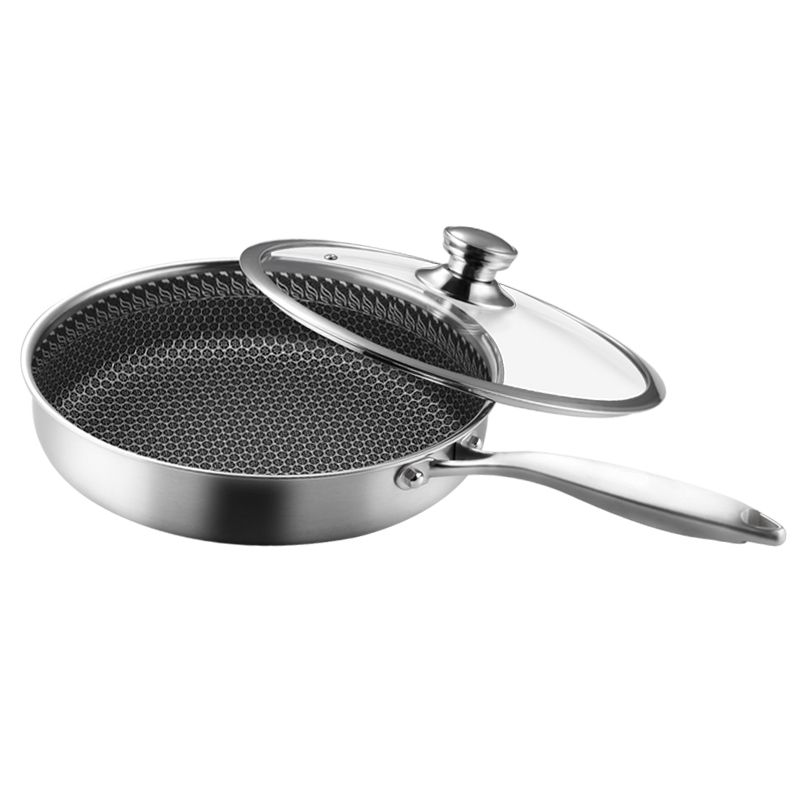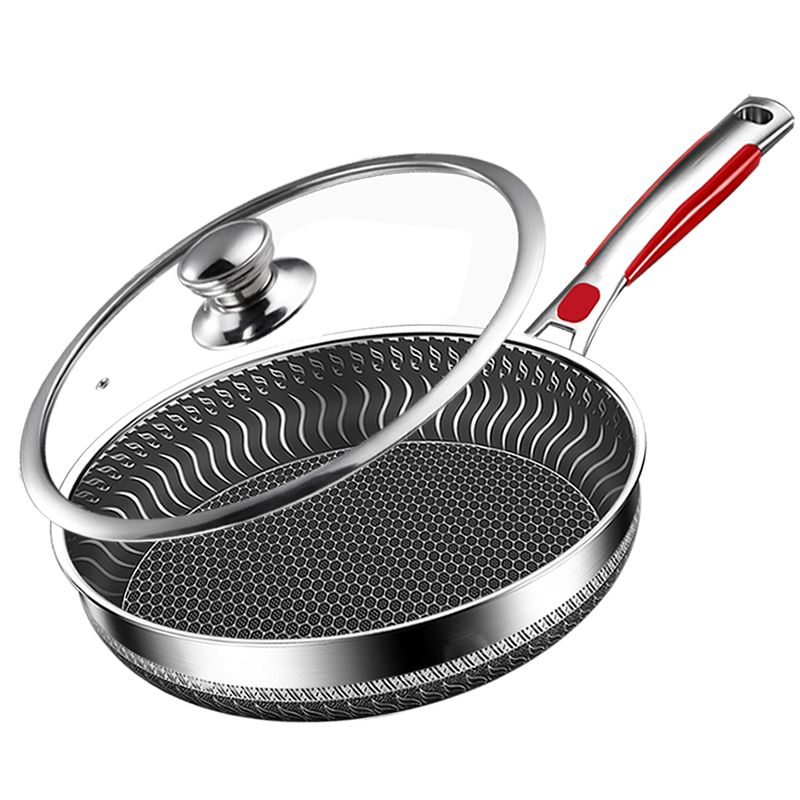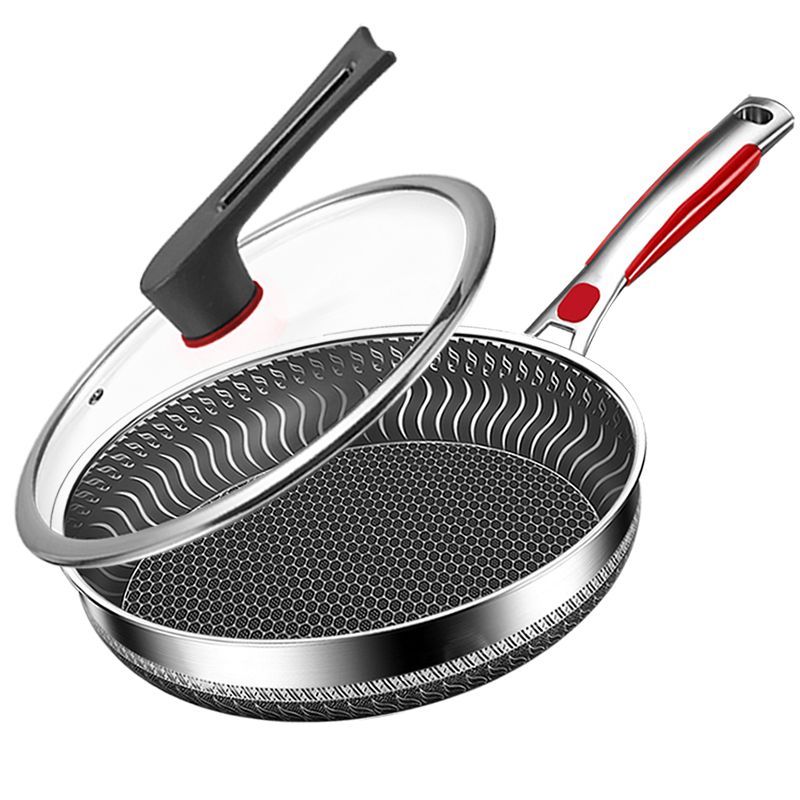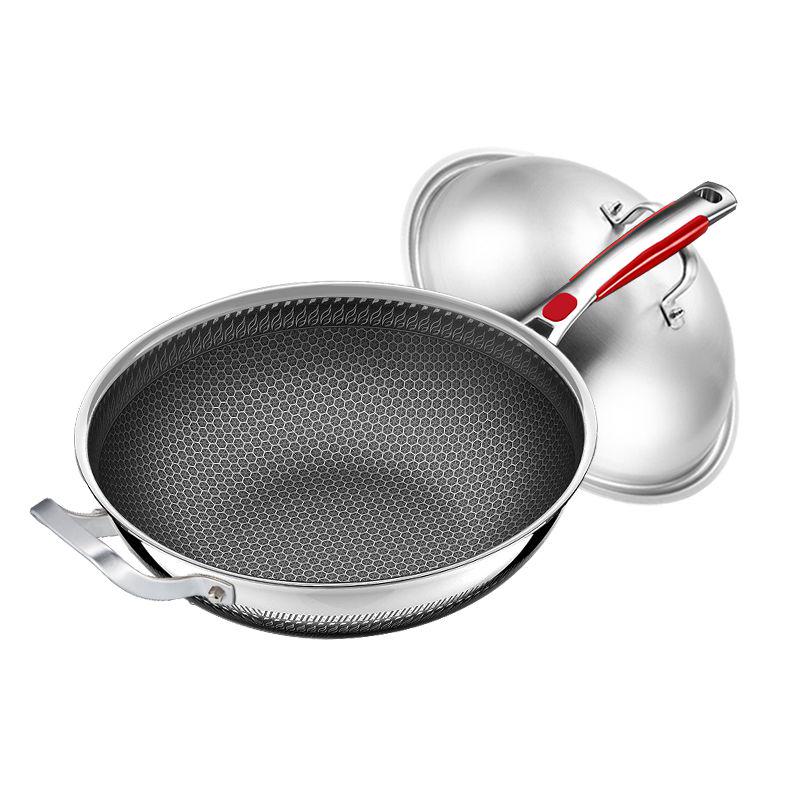




What is a honeycomb pot?
The honeycomb pot is a new type of cooking utensil. Its interior features an uncoated honeycomb mesh structure, effectively solving the problem of easy coating detachment. Due to the texture etched out being similar to the shape of a honeycomb, it is called a honeycomb pot.
Production process flow

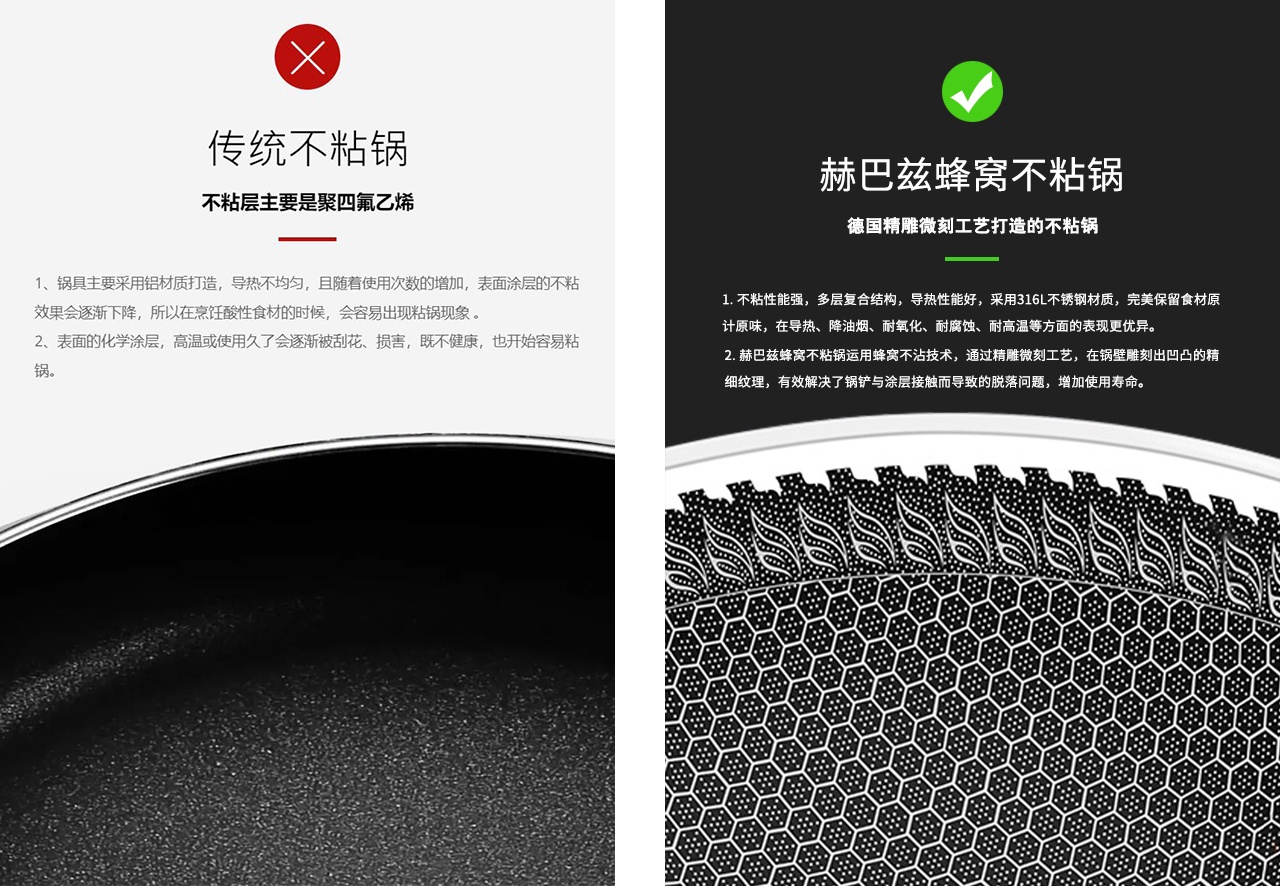
Steel composite
Use high-quality 304 or 316 composite stainless steel as the base material and perform integrated composite molding.

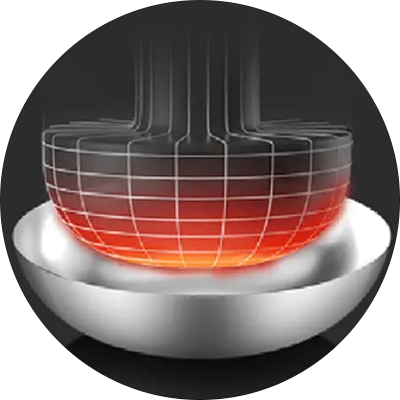
Cellular texture micro-engraving
Using micro-engraving technology, a raised and recessed honeycomb texture is formed on the composite stainless steel wafer.
Stretch forming
The composite stainless steel round pieces are stretched and shaped to form the pot body, with the preset concave-convex honeycomb texture areas positioned at the center of the formed pot body.

Concave surface anti-stick coating
Cover the textured depressions with a non-stick layer. The uneven structure of the honeycomb texture significantly reduces the area of the non-stick layer covering the inside of the pan.
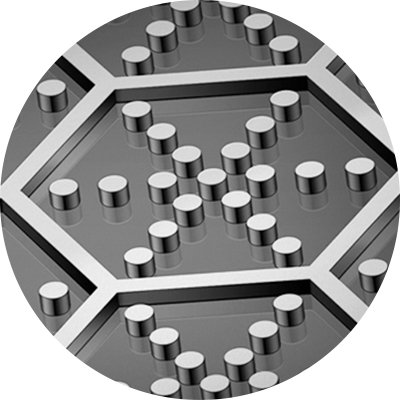
Concave surface polishing
Mechanically sand the convex surface of the honeycomb texture inside the pot, removing the non-stick layer on the convex area, so that the entire honeycomb texture can be presented perfectly.
The origin of the honeycomb non-stick pan
To solve the problem of easy sticking of traditional frying pans, manufacturers of cooking utensils have added non-stick coatings to stainless steel pans to achieve the non-stick effect. Pans with such coatings are called non-stick pans. There are two types of non-stick materials available on the market. One is the ceramic non-stick pans that have emerged in recent years - a water-based nano-ceramic non-stick layer is coated on the surface of the metal base through the sol-gel method using silica sol and silane monomers. The ceramic non-stick layer is composed of inorganic materials, but the non-stick effect is not ideal. The other is polytetrafluoroethylene, which has strong chemical stability and is widely used. With the advancement of coating materials, polytetrafluoroethylene without PFOA has become the preferred non-stick layer for non-stick pans.
Although the emergence of non-stick cookware has eliminated the problem of sticking in frying pans, the use of kitchen utensils such as spatulas and steel wool can accelerate the shedding of the non-stick coating. On one hand, this significantly reduces the non-stick effect; on the other hand, it can easily lead to health problems caused by people accidentally ingesting the shed coating.
Innovations in Ceramic Non-Stick Cookware
The German company Herbaz was the first to solve this problem by using honeycomb non-stick technology and has continuously developed and innovated the honeycomb non-stick cookware.
Consumer experience
New Experience of a Healthy Kitchen
It heats up quickly and can fry food with very little oil. The dishes cooked this way have bright colors and are both energy-saving and healthy.
Easy to clean, long-lasting pot body
After cooking, just wipe the pan with a cloth to remove the oil stains. After all the dishes are cooked, simply rinse them with water. Cleaning the pan is very simple. Avoid using the spatula to scrape randomly, as it will put pressure on the pan.
Even beginners in the kitchen can easily get the hang of it. The user-friendly design is even more considerate.
The stainless steel handle is designed based on ergonomics, making it more stable to hold. It is safe with vacuum rivets. The heat insulation treatment ensures that the handle won't get hot when cooking. The intelligent silicone temperature sensing ring design enables the temperature sensing ring at the handle of the pot to turn bright red when the temperature inside the pot reaches 60 degrees, indicating the temperature change and precisely controlling the oil temperature.
PRODUCTS
Recommended Products
Healthcare Kitchenware Leader
 HZIB 304 stainless steel flat-bottomed frying panBrand: HZIB
Material: 304 stainless steel
Applicable: For use with all gas induction cookers
Color:
Net weight: 1.6KG
Diameter: 26cm / 28cm / 30cm
Features: No smoke, non-stick HZIB 316 stainless steel flat-bottomed frying panBrand: HZIB
Material: 316 stainless steel
Applicable: For use with all gas induction cookers
Color:
Net weight: 1.6kg
Diameter: 26cm / 28cm / 30cm
Features: No smoke, non-stick HZIB 316 Antibacterial Stainless Steel Flat Bottom PanBrand: HZIB
Material: 316 antibacterial stainless steel
Applicable: For use with all gas induction cookers
Color:
Net weight: 1.6kg
Diameter: 28cm / 30cm / 32cm
Features: No smoke, non-stick HZIB 316 antibacterial stainless steel frying pan with stainless steel lidBrand: HZIB
Material: 316 antibacterial stainless steel
Applicable: For use with gas induction cooktops
Color:
Net weight: 2KG
Diameter: 32CM / 34CM
Features: Low smoke emission, non-stick, no coating, does not rust